Buttercream vs fondant taste is exactly what we cover in this guide.
Buttercream Vs Fondant Taste — I. Introduction: The Failure of the Peel-Off Icing
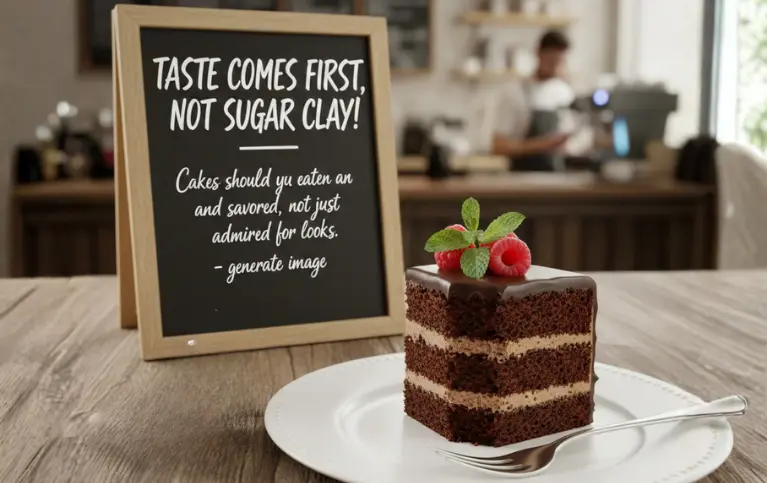
Imagine it, a flawless cake turns heads at any celebration. Its surface gleams, smooth as porcelain, painted with vibrant colors and impossibly perfect shapes. You lean in, fork in hand, your taste buds tingling with anticipation. But one bite, and you’re met with a dense, rubbery sheet of sweetness, so thick and flavorless, you instinctively peel it away, eager to reveal the actual cake underneath.
This is the curse of fondant: all promise, little payoff. Cake decoration, in our eyes, should be an invitation to savor, not a barrier to pleasure. At It Sprinkles, our philosophy is simple yet bold: fondant is for sculptors, not bakers. Life’s too short for “sugar clay” that’s more for show than for sharing.
Our mission? To champion the joy of moist eggless cake in Austin, cakes designed for eating, not just admiring, and to fight back against the trend of “style over substance.” The cake’s flavor should always be the hero on your plate.
II. Fondant’s Fatal Flaw: The Great Taste Sacrifice
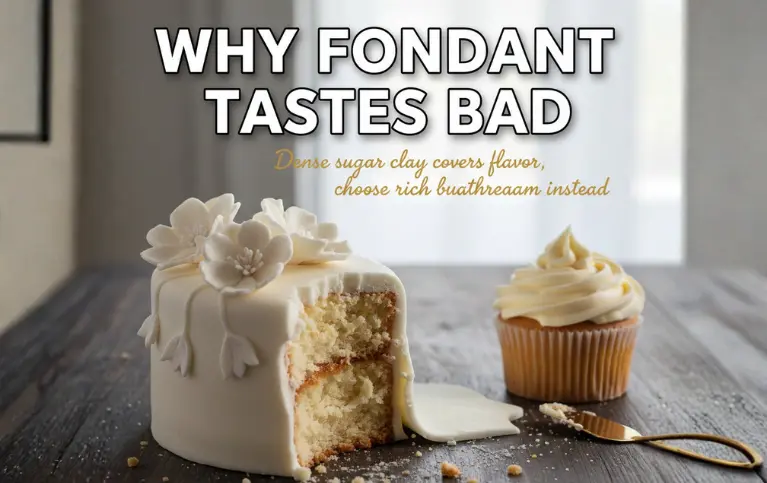
Let’s break it down. Fondant is function over flavor. Crafted mostly from sugar, water, and gums, its real talent lies in turning cakes into picture-perfect canvases. But what about its taste?
- Flavor Profile: Imagine tasting a wall of bland sweetness, sometimes with a hint of artificial vanilla. It coats the tongue but adds nothing to the cake beneath, certainly not the butteriness, subtle salt, or lively flavors you crave. It’s chewy, dense, sometimes sticks to your teeth, leaving a lingering aftertaste that says “decor” more than “dessert.”
- Purpose: Fondant excels at creating super-smooth surfaces and elaborate 3D shapes, a dream for sculptors and decorators, but rarely for those who actually want to eat their cake. It’s chosen for its stability and shipping durability, not for its ability to blend deliciously with the sponge beneath.
- Texture Crime: While fondant forms a “sugar shield,” buttercream and whipped frostings deliver velvet luxury. The contrast is dramatic, where fondant resists every bite, buttercream welcomes, melting under gentle pressure and finishing with a whisper of vanilla or cocoa on the palate.
In most cases, bakers use fondant because the cake underneath needs protecting, it’s usually denser, less moist, built for display, not delight. By choosing fondant, the cake itself takes a backseat, its flavor and tenderness muffled beneath the inedible shell. So why settle for a cake designed for photos alone?
Search “why fondant tastes bad” and you’ll find endless forums, polls, and cake-lover rants agreeing: when it comes to buttercream vs fondant taste, there’s simply no contest.
III. Our Flavor-First Philosophy: What We Prioritize Instead
At It Sprinkles, it all starts with the sponge, the real “art” of baking. Our team obsesses over moist eggless cake in Austin recipes, meticulously balancing plant fats, fresh fruits, and premium leaveners. The result is cake so soft it yields with a gentle press, releasing a delicate aroma of vanilla or chocolate, never needing a sugar shell for “protection.”
- Moisture Is King: Our vegan and eggless cakes are a testament to what’s possible when texture and taste lead the way. Whether it’s our carrot cake or decadent chocolate layer, each recipe is engineered to stay pillowy and moist, never rubbery or bland. Every slice is a celebration, a flavor burst that makes even skeptics believers in good vegan cake.
- A Frosting to Savor: Instead of the stiff, tasteless fondant icing, our cakes are finished with dreamy Swiss meringues, whipped buttercreams, or silky vegan ganaches. These icings dance with each crumb, melting seamlessly, adding layers of luxurious sweetness and rich mouthfeel that fondant can’t approach. This is dessert bliss, icing that you don’t have to peel away, because it’s just as good as the cake itself.
- Edible Art, Not Fake Beauty: For custom orders, we’ve found creative ways to make cakes visually stunning, without compromising taste. Smooth buttercream finishes, natural colors, hand-piped edible flowers, and edible photo printing grace our desserts. We believe edible art should always add to the experience, not leave a graveyard of fondant scraps at every party.
We’re proud to be known as a flavor-first cake shop, where every product, from a classic birthday cake to a custom wedding showpiece, is designed for taste above all.
Want proof? Order your custom buttercream cake or browse our vegan cake menu.
IV. Stop Discarding, Start Devouring (Our Promise)
Here’s our challenge, sweet lover: are you ordering a cake for a photo shoot, or for a memory? Every It Sprinkles cake is created so you’ll savor every bite, from the airy base through the final swirl of frosting. Our bakers want your guests to rave, not to quietly scrape away the icing.
We invite you to rethink what it means to indulge. Our customers tell us they finally found a cake where the frosting is just as irresistible as the cake beneath. No more peeling. No more waste. Just pure joy in every slice.
Read real feedback in our customer reviews, and see how taste wins every time.
V. Conclusion & Call to Action
Fondant’s reign is over. Life’s best moments deserve more than a cake that photographs well but disappoints at the table. Choose a bakery that builds for pleasure and substance, not just structure or shipping ease. At It Sprinkles, we’re committed to decadent, moist, vegan-friendly cakes paired with frosting that complements, not competes.
Ready for a bite where the icing is just as good as the cake?
Explore our collection of decadent vegan cakes and flavor-driven masterpieces today!
For general food-safety background, see Wikipedia: Cake.
Buttercream vs Fondant: The Science Behind the Taste
The difference in taste between buttercream and fondant can be attributed to their distinct chemical compositions. Buttercream is typically made from a mixture of butter, sugar, and sometimes milk or cream, which provides a rich, creamy flavor. Fondant, on the other hand, is made from sugar, water, and gums, resulting in a sweeter, more neutral taste. The type of sugar used in fondant, often corn syrup or glucose, can also contribute to its distinct flavor profile.
The texture of buttercream and fondant also plays a significant role in their overall taste experience. Buttercream is often light and airy, melting easily in the mouth, while fondant is denser and chewier. This texture difference can affect how the flavors are perceived and enjoyed. Additionally, the way in which buttercream and fondant are prepared can impact their taste. For example, the temperature and technique used to mix and whip buttercream can affect its consistency and flavor.
Understanding the science behind the taste of buttercream and fondant can help bakers and cake enthusiasts appreciate the craftsmanship and attention to detail that goes into creating delicious and visually appealing cakes. By recognizing the unique characteristics of each type of icing, bakers can make informed decisions about which to use for specific cakes and occasions.
Buttercream and Fondant in Different Cultures and Traditions
The use of buttercream and fondant in cake decoration varies across different cultures and traditions. In some European countries, such as France and Italy, fondant is often used to create intricate and elaborate cake designs, particularly for special occasions like weddings and birthdays. In contrast, buttercream is more commonly used in American and British baking traditions, where it is often paired with classic cake flavors like vanilla and chocolate.
In some Asian cultures, such as Japan and Korea, a type of buttercream called “whipped cream” is popular, which is made with heavy cream, sugar, and sometimes flavorings like vanilla or matcha. This whipped cream is often used to top cakes and pastries, providing a light and airy texture. In other cultures, like Mexico and Brazil, a type of fondant called “glacé” is used, which is made with powdered sugar, water, and sometimes milk or cream. This glacé is often used to decorate cakes and cookies, providing a smooth and glossy finish.
The use of buttercream and fondant in different cultures and traditions reflects the diversity and richness of global baking practices. By exploring and appreciating these differences, bakers and cake enthusiasts can gain inspiration and insights into new techniques and flavor combinations.
Buttercream vs Fondant: Tips and Tricks for Working with Each
When working with buttercream, it’s essential to use room temperature ingredients, as this will help to create a smooth and creamy texture. Additionally, using a high-quality butter with a high fat content will result in a richer and more flavorful buttercream. When coloring buttercream, it’s best to use gel or paste food colorings, as these will provide a more vibrant and consistent color.
When working with fondant, it’s crucial to knead the fondant thoroughly before using it, as this will help to develop its texture and pliability. Fondant can be colored using powdered food colorings, and it’s best to add the colorings gradually, as the color can quickly become too intense. To achieve a smooth and even finish with fondant, it’s essential to use a turntable and a fondant smoother or a similar tool.
By following these tips and tricks, bakers and cake enthusiasts can create beautiful and delicious cakes using either buttercream or fondant. Whether you’re a beginner or an experienced baker, understanding the unique characteristics and requirements of each type of icing will help you to achieve professional-looking results.
Frequently Asked Questions
What is the main difference between buttercream and fondant?
Buttercream is a type of icing made from butter, sugar, and sometimes milk or cream, while fondant is made from sugar, water, and gums. The main difference between the two is their taste, texture, and usage in cake decoration.
Which is more popular, buttercream or fondant?
The popularity of buttercream and fondant varies depending on the region, culture, and personal preference. However, in general, buttercream is more popular in American and British baking traditions, while fondant is more commonly used in European and Asian cake decorating traditions.
Can I use buttercream and fondant together on the same cake?
Yes, it is possible to use both buttercream and fondant on the same cake. This is often done to create a layered or multi-textured effect, where buttercream is used for the filling and fondant is used for the exterior decoration.
How do I store buttercream and fondant?
Buttercream should be stored in an airtight container in the refrigerator, where it will keep for up to a week. Fondant, on the other hand, can be stored at room temperature for up to two weeks, or in the refrigerator for up to a month.
Can I make my own buttercream and fondant at home?
Yes, it is possible to make your own buttercream and fondant at home. There are many recipes available online, and with a little practice and patience, you can create professional-looking and delicious-tasting icings.
Buttercream and Fondant in Modern Cake Design
The use of buttercream and fondant in modern cake design has evolved significantly in recent years. With the rise of social media, cake designers are now more focused than ever on creating visually stunning cakes that are almost too beautiful to eat. Buttercream and fondant are being used in new and innovative ways to create intricate designs, patterns, and textures that are perfect for Instagram. From ombre effects to geometric patterns, the possibilities are endless, and cake designers are constantly pushing the boundaries of what is possible with these two types of icing.
One of the most significant trends in modern cake design is the use of buttercream and fondant in combination with other ingredients, such as fresh flowers, fruits, and nuts. This has led to the creation of stunning cakes that are not only visually appealing but also delicious and fragrant. For example, a cake featuring a buttercream frosting infused with the flavor of rose petals and topped with fresh raspberries is a perfect example of how these two types of icing can be used to create a truly show-stopping dessert.
In addition to their use in traditional cake design, buttercream and fondant are also being used in other areas of the culinary world, such as in the creation of cake pops, macarons, and other types of sweet treats. This has led to a new generation of cake designers and decorators who are skilled in the use of these two types of icing and are constantly coming up with new and innovative ways to use them.
The Health Benefits of Buttercream and Fondant
While buttercream and fondant are often seen as indulgent treats, they can also have some surprising health benefits. For example, buttercream made with high-quality butter and sugar contains conjugated linoleic acid (CLA), a nutrient that has been shown to have anti-inflammatory properties. Additionally, fondant made with gum arabic, a natural adhesive derived from the sap of the acacia tree, can help to support digestive health.
In addition to these specific health benefits, buttercream and fondant can also play a role in supporting mental health and wellbeing. The process of decorating a cake with buttercream or fondant can be therapeutic and meditative, providing a much-needed break from the stresses of everyday life. Furthermore, the act of sharing a delicious cake with friends and family can help to bring people together and foster a sense of community and connection.
It’s worth noting, however, that not all buttercream and fondant are created equal, and some types may be healthier than others. For example, buttercream made with artificial flavorings and colorings may be less healthy than buttercream made with natural ingredients. Similarly, fondant made with high-fructose corn syrup may be less healthy than fondant made with natural sweeteners like honey or maple syrup.
Sustainability and the Future of Buttercream and Fondant
As the world becomes increasingly aware of the importance of sustainability and reducing our environmental impact, the future of buttercream and fondant is likely to be shaped by these concerns. Already, we are seeing a trend towards more sustainable and eco-friendly types of icing, made with natural ingredients and minimal waste. For example, some cake designers are now using plant-based milks and vegan butter substitutes to create dairy-free buttercream, while others are using natural food colorings and flavorings to reduce the environmental impact of their fondant.
In addition to these changes in ingredients and production methods, the way in which we consume and dispose of buttercream and fondant is also likely to change. For example, there may be a shift towards more minimalist and simple cake designs that use less icing and generate less waste. Additionally, there may be a greater emphasis on using locally sourced and seasonal ingredients to reduce the carbon footprint of cake production.
As the demand for sustainable and eco-friendly types of icing continues to grow, it’s likely that we will see a new generation of innovative and environmentally conscious cake designers and decorators who are skilled in the use of natural ingredients and sustainable production methods. This will not only help to reduce the environmental impact of the cake industry but also provide consumers with delicious and sustainable treats that they can feel good about eating.